
Creating a launch video in 2026 can cost anywhere from $500 to over $100,000, depending on your approach. Here's a quick breakdown:
- DIY Videos ($500-$5,000): Ideal for startups on tight budgets. Uses freelancers, AI tools, or stock footage. Quality varies but works for basic needs like social media clips.
- Mid-Range Professional Videos ($5,000-$25,000): Balanced option with small teams, custom graphics, and polished results. Great for product launches or SaaS launch video guides.
- High-End Cinematic Videos ($25,000-$100,000+): Premium productions with full crews, advanced effects, and cinema-grade equipment. Best for major campaigns or enterprise-level clients.
Costs are influenced by factors like video length, production complexity, talent, and location. Advances in AI have reduced production expenses by about 15%, making quality videos more accessible. Careful planning, batch filming, and leveraging tools like EasyLaunchVideo can help you save up to 40% without sacrificing quality.
Stop Guessing: Video Production Costs 2026 Revealed
Watch the full guide on YouTube.
Launch Video Production Cost Breakdown
Let's dive into the specifics of how costs are distributed across the three main phases of video production: pre-production, production, and post-production. Understanding these allocations can help you plan effectively and avoid surprises.
Pre-Production Expenses
Pre-production is all about setting the stage for your project. It typically takes up 15-25% of your total budget, though for more complex projects, it can climb to 30%. Investing time and resources here can save you from costly revisions later. Changes during filming or editing can cost $500-$2,000 per round.
Scriptwriting often dominates pre-production costs, ranging from $500 to $5,000 depending on the complexity of the script and the writer's experience. Freelance scriptwriters usually charge $50-$150 per hour. For tech startups, especially those explaining SaaS or AI products, discovery and strategy sessions are a must. These sessions help translate intricate backend processes into a clear, engaging narrative. Storyboarding, which visually maps out each scene, adds another $500-$3,000 to the budget.
Other common pre-production expenses include:
- Creative development: $500-$10,000
- Location scouting: $100-$2,000
- Casting: $200-$5,000
- Production planning: $1,000-$5,000
Interestingly, about 18% of startup founders spend 6-8 weeks on planning and development before production even begins. Finalizing your script early is crucial. Adjustments in pre-production are far less expensive than making changes during filming or post-production.
Production Expenses
Production, the phase where filming happens, takes the lion's share of your budget: around 40-50%. The cost of a full-day crew in 2026 ranges from $5,000 to $20,000, depending on the team's size and experience. A director of photography, for instance, might charge $500-$1,500 for smaller projects and $3,000-$8,000 for high-end productions. Additional crew members, like lighting technicians and audio engineers, add to the overall cost.
Equipment rentals can range from $200 to $800 per day unless included in the crew's rate. Location expenses vary widely: filming in your office might be free, while renting a professional studio could cost $500-$3,000 per day. If you need permits for public locations, expect those fees to fall anywhere between $0 and $5,000.
On-camera talent is another significant expense. Whether you're hiring professional actors or using company employees, expect to pay $500-$5,000 per person, depending on their experience and union status. Crew travel costs can also add up, ranging from $0 to $10,000 based on the distance and team size.
Once filming wraps, it's time to bring everything together in post-production.
Post-Production Expenses
Post-production is where the magic happens, and it typically accounts for 25-35% of your total budget. Video editing is the cornerstone of this phase, with costs ranging from $1,000 to $10,000 per project or $75-$150 per hour. A 30-second marketing video might require 6-15 hours of editing, depending on the complexity of the footage.
To enhance the final product, motion graphics and animation can be added for $50-$150 per hour or $1,000-$15,000 per project. Color grading, which gives your video a polished visual style, costs $500-$3,000. Sound design and mixing fall between $300 and $3,000, while professional voice-overs range from $300 to $2,000. For music, licensing fees can start as low as $30 for stock tracks but may exceed $5,000 for broadcast rights.
Most post-production quotes include 1-2 rounds of revisions, but marketing videos typically go through 3-5 rounds. Additional revisions cost $200-$500 for freelancers or $500-$2,000 for agencies per round. If your video needs to be reformatted for different platforms, such as 9:16 for Instagram, 1:1 for Facebook, and 16:9 for YouTube, expect to pay an extra $500-$3,000 unless this is already covered in your initial agreement. To avoid unexpected costs, make sure the number of revision rounds is clearly outlined in your contract.
3 Budget Tiers for Startup Launch Videos
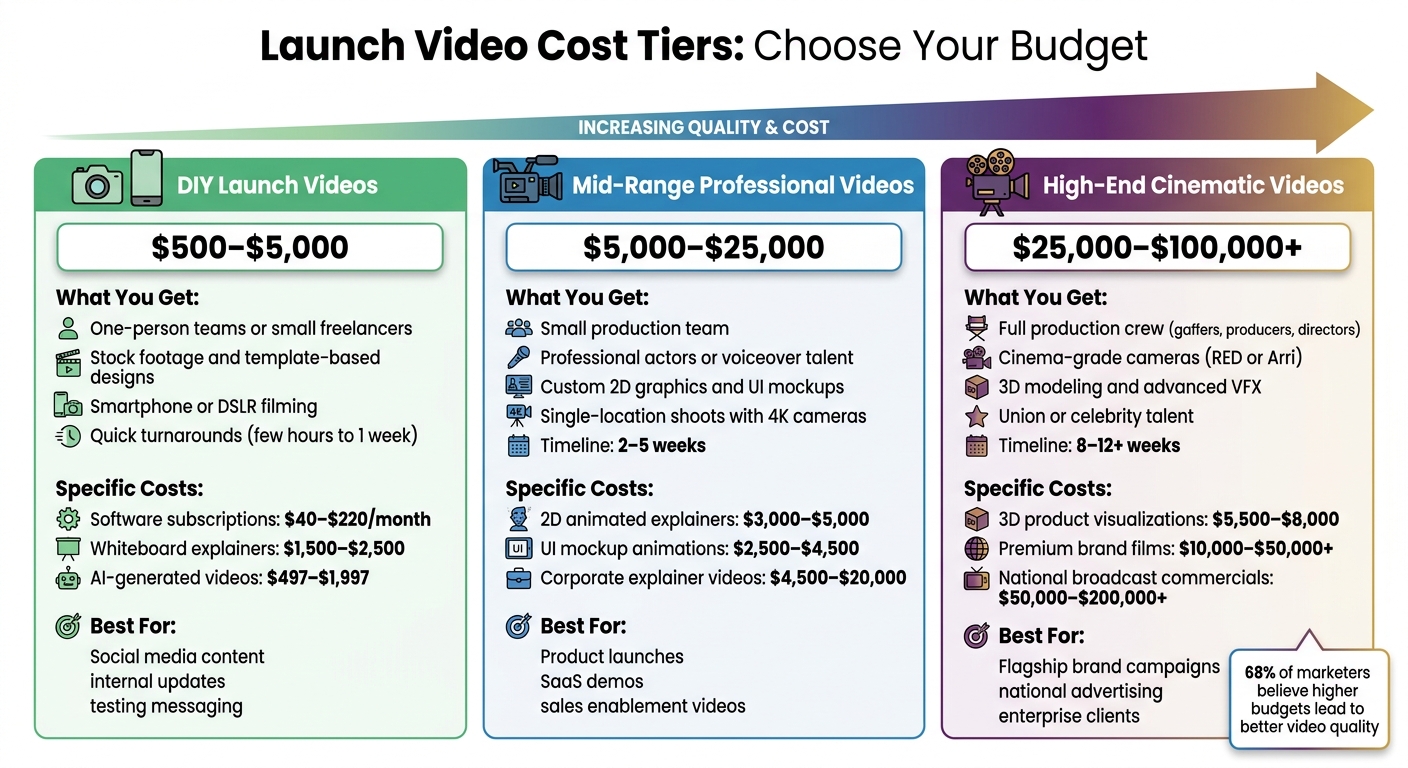
Here's a breakdown of options based on your budget:
DIY Launch Videos ($500-$5,000)
If speed and keeping costs low are your priorities, this is the way to go. DIY videos rely on internal resources, freelancers, or AI-powered tools. These are perfect for short social media clips, whiteboard explainers, or animated slideshows made with templates. The results can range from decent to noticeably budget-conscious.
What you'll typically get:
- One-person teams or small freelancers handling the entire process
- Stock footage and template-based designs
- Smartphone or DSLR filming
- Quick turnarounds, anywhere from a few hours to a week
Expect to pay $40-$220 per month for software subscriptions. Whiteboard explainers cost $1,500-$2,500, while AI-generated videos can range from $497-$1,997.
This tier is ideal for social media content, internal updates, or testing new messaging before committing to a bigger production. Interestingly, 68% of marketers believe that higher budgets often lead to better video quality.
If you're looking for something more polished, mid-range professional videos are the next step.
Mid-Range Professional Videos ($5,000-$25,000)
This tier strikes a balance between quality and affordability. You'll typically get a small production team and a polished 60-90 second video, often shot over 1-2 days. Custom graphics and professional-grade equipment elevate the production quality.
What you'll typically get:
- Professional actors or voiceover talent
- Custom 2D graphics and UI mockups
- Single-location shoots with 4K cameras
- A production timeline of 2-5 weeks
Costs in this range vary:
- 2D animated explainers: $3,000-$5,000
- UI mockup animations: $2,500-$4,500
- Corporate explainer videos: $4,500-$20,000
Quality doesn't always necessitate exorbitant spending. A well-planned simple screen recording can be surprisingly effective. - Advids
This tier works well for product launches, SaaS demos, and sales enablement videos where you need a professional look but don't require Hollywood-level production.
For startups aiming to make a big splash or impress enterprise clients, the high-end tier is worth exploring.
High-End Cinematic Videos ($25,000-$100,000+)
When you need top-tier production, this is where to invest. High-end cinematic videos involve full-service agencies, cinema-grade equipment, and multi-day shoots. These productions include everything from strategic planning to advanced post-production techniques like custom VFX.
What you'll typically get:
- A full production crew, including gaffers, producers, and directors
- High-end cinema cameras, such as RED or Arri
- 3D modeling and advanced visual effects
- Union or celebrity talent
- Production timelines of 8-12+ weeks
Cost examples include:
- 3D product visualizations: $5,500-$8,000
- Premium brand films: starting at $10,000 and exceeding $50,000
- National broadcast commercials: $50,000 to $200,000+
This tier is best suited for flagship brand awareness campaigns, national advertising, or targeting enterprise clients who expect production values that reflect your startup's credibility and ambitions. It's an investment that positions your company as a serious contender in your industry.
What Drives Launch Video Costs in 2026
The costs of launch videos in 2026 are shaped by several factors, including runtime, technology, and location. Each of these plays a key role in determining overall production expenses.
Video Length and Production Complexity
The length of a video is one of the biggest cost drivers. For example, a 30-second video might be completed in a single day of shooting, while a 2-minute production could take several days to wrap up. The complexity of the production also adds to the budget.
Incorporating elements like 3D animations or advanced visual effects can significantly increase costs. Product visualizations, for instance, can cost between $5,500 and $7,000 per minute, while high-end cinematic effects may range from $15,000 to over $50,000 per minute. Each added layer of complexity, whether it's intricate effects or other enhancements, demands more time and labor, pushing costs higher. Beyond just runtime, the use of cutting-edge tools is also reshaping how costs are structured.
How AI Tools Reduce Production Costs
Technology, particularly AI, is transforming how videos are produced and, in turn, impacting costs. By 2025, agencies using AI-powered graphics tools were able to cut budgets by about 15% compared to the previous year while maintaining the same quality. AI excels in tasks like generating b-roll footage, creating variations, and automating editing processes. For example, AI platforms can now produce animated marketing videos in just three minutes, a process that traditionally took two weeks.
A real-world example comes from 2026, when the HR platform Bambee adopted a subscription-based video production model that utilized AI for creating multi-format outputs. This approach led to a 50% reduction in cost per lead and helped the company achieve ROI in under a month.
That said, while AI can streamline technical tasks, it doesn't eliminate the need for human input. Creative strategy, messaging, storytelling, and brand alignment still require human expertise. Additionally, physical production elements, such as location and talent, continue to demand a significant portion of the budget.
Location and Talent Costs
Where you shoot your video can also have a big impact on costs. Renting a studio typically costs between $500 and $3,000 per day, offering a controlled environment and predictable expenses. Shooting on location, however, introduces additional costs, including travel, permits, which range from $100 to $500, and potential weather-related expenses that can increase the budget by 10% to 30%.
Talent fees are another important consideration. Professional actors can charge anywhere from $500 to $5,000 per day, while voiceover artists typically cost between $300 and $2,000 per session. On top of these fees, usage rights, such as broadcast or perpetual licensing, can add an additional 20% to 50% to the talent budget. Filming in major cities like New York or Los Angeles also comes with a hefty premium, often 30% to 50% higher than filming in smaller markets.
Each of these factors, runtime, technology, location, and talent, plays a critical role in shaping the overall costs of producing launch videos in 2026.
Affordable Launch Videos with EasyLaunchVideo
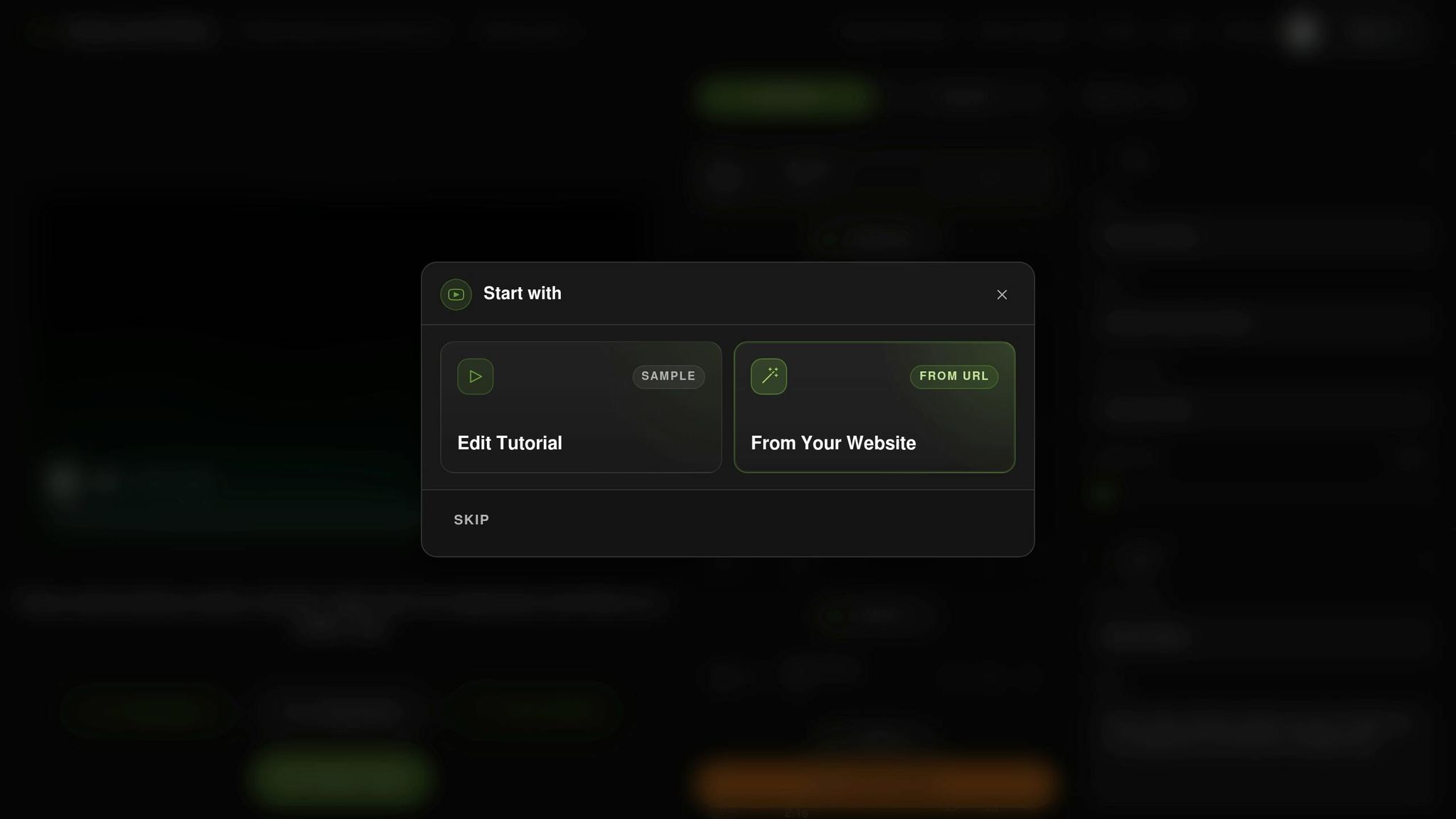
For startups trying to sidestep the steep costs of traditional video production, EasyLaunchVideo offers a budget-friendly alternative. It allows businesses to create professional launch videos without the need to hire expensive agencies. Let's dive into how its features combine cost-saving technology with creative flexibility to produce high-impact videos.
Features and Benefits
EasyLaunchVideo is designed specifically for early-stage startups that need high-quality videos but are working with limited budgets. The platform includes tools like loop scene editing, which lets users repeat visual elements to create seamless, polished videos without requiring advanced editing skills. Additionally, its video rendering feature automates the editing process, delivering professional-grade results without the need for costly software.
One of the standout features is the platform's ability to provide complete creative control. By integrating AI-based efficiencies, EasyLaunchVideo ensures that users can achieve professional results while keeping costs low. To make the most of the platform, it's crucial to start with a strong narrative and a well-thought-out script, paired with templates that align with your brand's identity.
Pricing Plans
EasyLaunchVideo's pricing structure is designed to fit within the DIY budget range, making it accessible to startups.
- The Basic Plan includes essential features like launch video creation and loop scene editing, perfect for companies just starting out.
- The Pro Plan offers more advanced tools, such as enhanced video rendering, for teams needing higher-end outputs.
Both plans fall within the $500 to $5,000 range, ensuring startups can produce high-quality videos while managing their budgets effectively. This approach allows early-stage businesses to allocate resources wisely while still delivering a professional message to their audience.
How to Optimize Your Launch Video Budget
When creating a launch video, it's all about balancing quality and cost. Smart startups in 2026 have figured out how to trim expenses by 30-40% without losing that polished, professional look. The trick lies in understanding where to spend and where to save.
Use Stock Footage and Assets
Stock footage can be a game changer when it comes to cutting costs. Instead of arranging costly custom shoots for b-roll or background scenes, you can purchase high-quality stock clips for anywhere between $50 and $500 per clip. This works especially well for generic visuals like cityscapes or abstract shots that don't need to feature your product or team.
Taking it a step further, building a library of reusable assets, like branded templates, motion graphics, and music tracks, can save even more in the long run. For instance, Sonesta International Hotels slashed their video production expenses by 80% through smart asset reuse. Kristin Broadhead, Director of Learning & Development at Sonesta Hotels, shared:
The ease of content update and cost savings are remarkable.
For companies with ongoing video needs, this approach can bring production costs down by 30-40%. It's a simple yet effective way to make every dollar count.
Batch Filming and Focus on Story
Batch filming is another effective way to save. By shooting multiple scenes or videos in one session, you can spread out the costs of crew, equipment, and location fees, potentially lowering per-video expenses by 40-60%. To maximize savings, try to film as much as possible in a single location to reduce setup and travel costs.
But don't forget the importance of storytelling. A concise, well-crafted narrative can make a bigger impact than an overly complex production. Michael Pirone, Co-Founder of Vidico, puts it this way:
Our 10x approach, delivering multiple versions of the same video with different openers, helps brands test what resonates best with their audience.
A strong 30-second story, with a clear script and value proposition, can often outperform a longer, less focused video. This approach not only saves money but also ensures your message is sharp and engaging.
Use AI and Hybrid Production Tools
AI tools have revolutionized video production, offering cost-effective and time-saving solutions. AI-generated videos can cost 50-80% less than traditional animation and can be completed 5-10 times faster. Many startups now rely on a hybrid model, using AI for tasks like creating social media clips or making quick edits.
AI tools can handle scriptwriting, voiceovers ranging from $99 to $499, and explainer videos priced between $497 and $1,997. In 2025, agencies using AI-powered graphics software managed to deliver the same quality while cutting budgets by 15% compared to the previous year. While AI streamlines repetitive tasks, it doesn't replace human creativity. It simply frees up resources for more strategic decisions.
Conclusion
Launch video costs can vary significantly, depending on your production choices. Budgets range from as low as $500 for DIY efforts to over $100,000 for high-end productions. Most startups, however, tend to spend between $5,000 and $25,000. Factors like video length, animation complexity, talent fees, and location heavily influence these costs. For instance, in the U.S., the average cost for a 60-second video hovers around $6,060.
One thing is clear: careful planning can make all the difference in keeping costs manageable. Advances in technology, such as AI and hybrid production methods, have brought costs down by about 15% compared to previous years. Additionally, strategies like batch filming can reduce per-video expenses by as much as 40-60%. By embracing these modern techniques, startups can balance affordability with quality.
EasyLaunchVideo simplifies this process by offering budget-friendly video creation solutions without the hidden fees that often inflate traditional production costs by 15-25%. The platform provides the tools and resources you need to create launch videos that connect with your audience, whether you're working within tight financial limits or aiming for a polished, premium result.
The key is to focus on what truly matters: your story and the value you bring to your audience. Finalize your script efficiently, make smart use of stock assets, and integrate AI tools while keeping creative control. With the right approach, you can produce a professional launch video that delivers real impact.
FAQs
What budget tier fits my startup launch?
In 2026, the cost of creating a startup launch video depends on the level of quality and the specific requirements of your project. Here's a quick breakdown:
- Budget-friendly options: These range from $1,100 to $1,500 and are ideal for basic, straightforward videos.
- Mid-range budgets: Expect to spend $2,000 to $4,000 for videos that include polished editing, motion graphics, and a more professional finish.
- High-end productions: For advanced features and impactful campaigns, costs can climb to $5,000-$20,000 or more.
Your choice should align with your goals, branding needs, and financial limits. If you're looking for an affordable yet effective solution, a budget of $1,100 to $3,000 can deliver solid results. However, for maximum impact and premium quality, investing $5,000 or more is worth considering.
How many revisions should I plan and pay for?
Plan and set aside a budget for 1 to 3 revision rounds. It's common for professional video projects to go through several feedback sessions to fine-tune the final product. These revisions give you the chance to make adjustments to the script, editing, or other key elements to ensure the video meets your expectations.
What can I cut without hurting video quality?
You can save money on video production without lowering its quality by focusing on what truly matters. Start by simplifying elements that don't contribute to the core message or visual impact. For example, trim long introductions, cut repetitive scenes, and eliminate unnecessary transitions.
When it comes to editing, look for ways to streamline the process. Remove redundant shots, simplify motion graphics, and shorten segments that don't serve a clear purpose. By doing this, you'll keep your video engaging while reducing production time and staying within budget.